


The novel My Name Is Leon by British author Kit de Waal has become one of the most talked-about works of contemporary literature on social issues in the United Kingdom. The book immediately attracted the attention of readers and critics alike thanks to its profound emotional authenticity and vivid characters.
The plot centres on nine-year-old Leon, who is sent to a foster family after a family tragedy. Leon’s story is not only a child’s view of a complex adult reality but also a broader social canvas about inequality, identity and the need for support. The novel was later adapted for the screen, with filming taking place in Birmingham. Read about the filming process and its features at birmingham-trend.com.
Birmingham as a film location
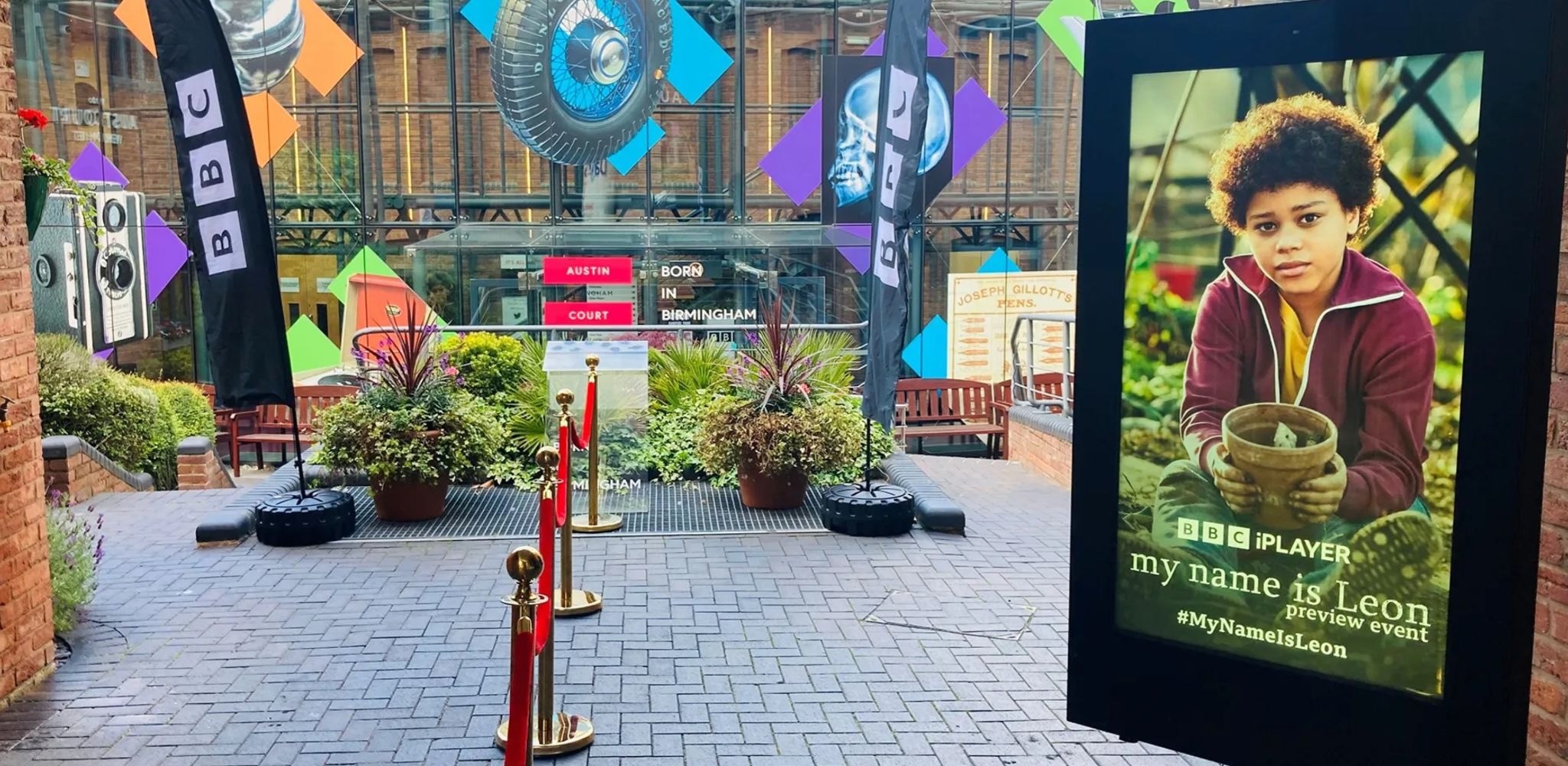
The fact is that Kit de Waal was born in Birmingham to a family of Irish immigrants, and her own childhood was constantly fraught with cultural and social challenges. This inspired her to create many of the novel’s characters and plotlines. Before writing My Name Is Leon, Kit de Waal already had experience in literature, worked as a social issues lawyer, and actively supported young writers.
Her style combines realistic social drama with subtle psychological characterisation, making her works vivid and sincere. In addition to My Name Is Leon, the writer is known for her collection of short stories and the novel The Trick to Time, which also touches on themes of family, memory, and social injustice.
The atmosphere of 1980s Birmingham chosen for the film adaptation became an important component of the film. Local streets, parks and architectural details help transport the viewer back to the time when Leon faced the challenges of the adult world. Filming took place in key areas of the city—the Jewellery Quarter, Cannon Hill Park, and the central streets of Birmingham—which added authenticity and recreated the realistic environment of middle-class and working-class neighbourhoods.
Birmingham was not chosen by Kit de Waal by chance, as it is the city of her childhood, where she grew up in this cultural environment. As a result, she knows and understands it very well. It is therefore no coincidence that this environment also becomes a living character in the book and on screen.
The filmmakers also did their best, striving not only to transfer the plot from the pages to the screen but also to convey the atmosphere of the time—the colors of clothing, music, interiors and social moods of the 1980s. All this makes the film not just an adaptation of the book but a kind of socio-historical portrait of Birmingham, where the main character grows up amid the joys and difficulties of his surroundings.
Kit de Waal’s work and social issues

A special place in the author’s work is occupied by her detailed depiction of life in the working-class neighbourhoods of Birmingham and Liverpool, marked by attention to culture, music, and everyday challenges. At the same time, Kit de Waal emphasises in her interviews that her goal was to show universal human experiences through specific local stories. The film adaptation of the novel highlights these social themes, as it focuses on Leon’s emotions, choices, and struggles for family and identity.
Leon and his portrayal on screen

All of the above can be seen in the example of the main character of the novel My Name Is Leon. Leon is a nine-year-old boy who ends up in a foster family after his parents divorce due to tragedy and certain social circumstances. His character combines childlike spontaneity, acute emotional sensitivity and a sense of loss.
Leon strives to maintain contact with his biological mother and brother, tries to understand the adult world and, despite his young age, find his place in it. His story reveals complex social issues—foster families, inequality, racial prejudice and the search for identity.
In the BBC television adaptation, Leon was played by Yul James, a young British actor who stood out for his naturalness and deeply emotional performance. His realistic portrayal allowed viewers to feel the boy’s inner world, and understand his fears, sadness and moments of joy. Yul James’s acting was highly praised by critics for his ability to embody childlike sincerity without exaggeration, while maintaining the psychological authenticity of the character.
The image of Leon in the film and book is not just the story of an individual child, but a symbol of the struggle for love and proper upbringing in a world where social conditions often determine a person’s fate. Thanks to Yul James’ talent, the character took on a vivid, tangible form on screen, harmoniously combining the artistic truth of the book with the dramatic power of cinema.
The impact of the film and the future of adaptations

The BBC television adaptation of My Name Is Leon has received critical and audience acclaim. Particular praise has been given to its accurate recreation of the atmosphere of the 1980s, the skill of the actors, and the strong direction. The film helps the audience to understand the plot of the book in a new way and to feel the boy’s experiences more deeply.
For British audiences and readers abroad, this is not just a film adaptation of a novel but an opportunity to draw attention to issues of children’s rights, the foster care system, and complex social realities. In addition, the film’s success could signal a trend for other creators of adaptations of contemporary socially oriented novels emerging in Birmingham and other British cities.
The film adaptation of My Name Is Leon demonstrates how literature and cinema can interact to amplify social themes, creating a work that simultaneously entertains, informs, and educates. Birmingham becomes not just a backdrop in this process but a full-fledged symbol of the urban community, its history, and its cultural environment.
Sources:
- https://rcwlitagency.com/clients/waal-kit-de/
- https://www.metfilmschool.ac.uk/articles/news/my-name-is-leon-written-by-birmingham-patron-kit-de-waal-premieres-on-bbc/
- https://austincourt.theiet.org/news/latest-news/bbc-preview-new-film-my-name-is-leon-at-birmingham-s-best-kept-secret-iet-birmingham-austin-court/
- https://mixedmessages.substack.com/p/kit-de-waal-now-i-go-everywhere-as