


The former Futurist cinema on John Bright Street in Birmingham has been granted Grade II listed status. This was arranged by the Department for Culture, Media and Sport on the recommendation of the regional branch of the national government body Historic England.
It should be noted that this regional branch acts as an advisor to the government on matters relating to the historical environment. It is effectively an executive non-departmental public body that protects and supports historical sites in England, in this case Birmingham, by providing advice, support and grants for the preservation of such buildings or other monuments. To find out why the cinema building received so much attention and what it was famous for, read birmingham-trend.com.
History of the cinema
It should be noted that another organisation, namely the Victorian Society in Birmingham, also applied for this building and, through its conservation advisor for Birmingham and the West Midlands, submitted a request to Historic England. Ultimately, the request was reviewed and approved. What is the secret of this cinema, or rather the building in which it once operated quite successfully?
The fact is that, apart from being one of the oldest cinemas in Birmingham, the Futurist is an early example of local cinema design. Incidentally, this Edwardian-era cinema had previously been listed as a Grade A listed building of local significance. In addition, the building has another historical feature: it is one of the few significant terracotta structures in the city that was not designed by a local architect.
It is now known that the owner of the Futurist cinema, Sol Levy, also owned the Rock cinema. The latter was built by Essex, Nichol and Goodman. However, it was demolished in 1960. This freed up land for the construction of Smallbrook Ringway.
But let’s return to the cinemas and their first owner. It is said that Levy was fascinated by beautiful design and music, and both of these concepts became the key to the cinema’s success in the early 20th century. In March 1929, the Futurist became the first cinema in Birmingham to show sound films.
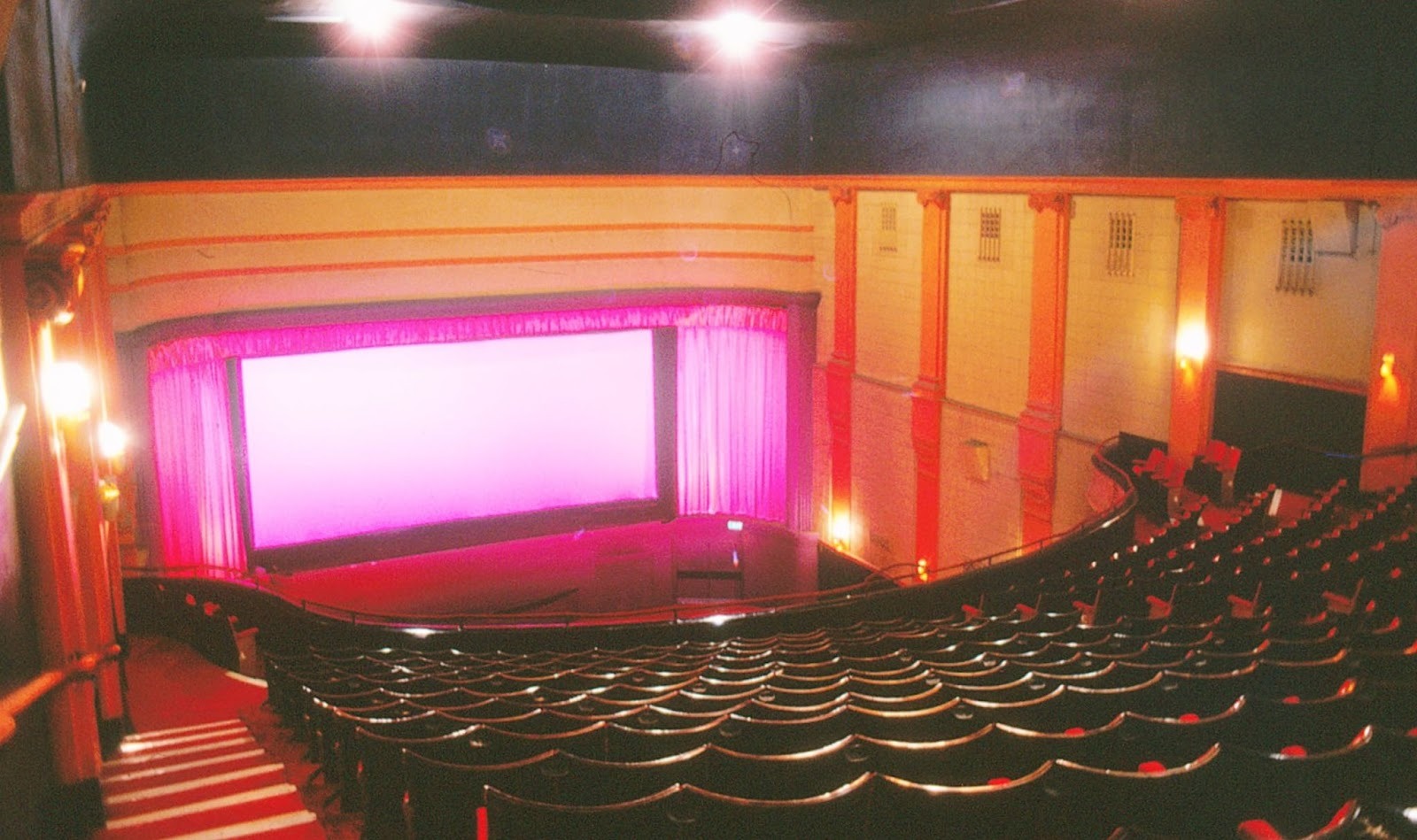
That is, films were shot and dialogues were recorded at the same time. Then everything was played back synchronously — images with sound. This was in contrast to silent films, which were broadcast without sound. The accompanying music was played by musicians sitting here in the cinema. Later, screen curtains appeared here for the first time in Birmingham.
The Singing Clown is a sound film that was shown in March 1929. It was in this year that sound films in English first appeared. This first screening was extremely popular, marking the beginning of a new era in cinema, when moods, intonations and emotional moments could be conveyed by the actors’ voices. This added to the popularity of cinema, and The Futurist was the first of the local cinemas to adapt to this new type of film.
The Futurist was designed in 1914 by architect Arthur Stockwell. However, no matter how progressive the project was, construction of the building was delayed due to the outbreak of World War I. But everything comes to an end eventually, even war. So, in the summer of 1919, the grand opening of the establishment finally took place.
This cinema did not have a good relationship with world wars, even though it survived both of them. During the First World War, the Futurist was closed because there was no time for entertainment. During World War II, the building was damaged by a German Luftwaffe air raid.
After that, the Futurist was closed and only reopened in 1943. In the last days of its existence as a cinema, in the 1980s, it was divided into two screens and became the Kenon cinema. It closed in 1991 due to the rise of multiplex cinemas, and in recent years has been used as a dance club, seafood restaurant, private dance club, and then stood abandoned and neglected for years.
Classic design
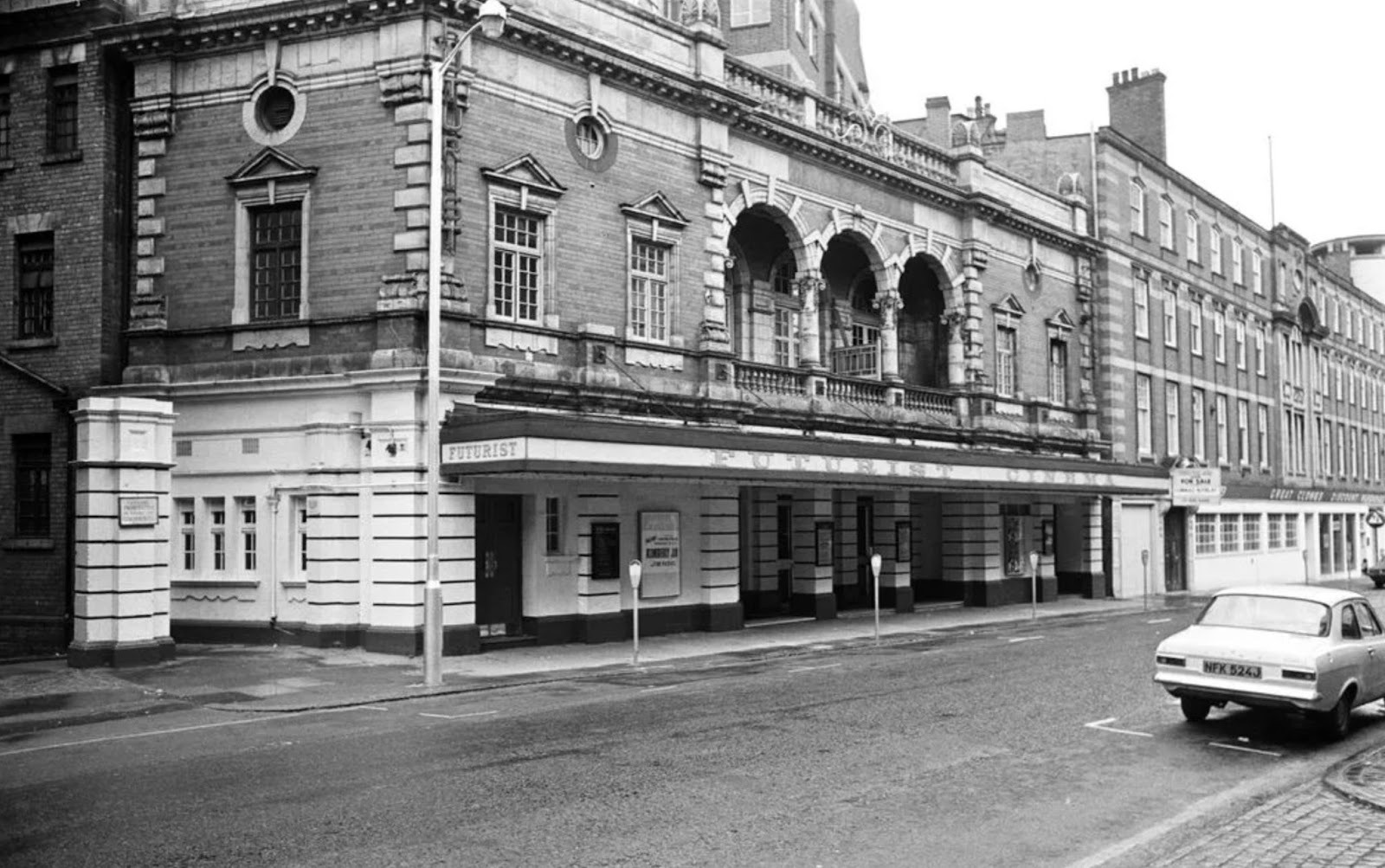
A few words about the street where it stood. It was John Bright Avenue, built in 1882 through a slum area known in Birmingham as Inky. Along this street stood amazing buildings in various styles, including futuristic ones. The street is named after John Bright, a Member of Parliament from Birmingham and a champion of social reform. Designed to promote urban renewal, the street resembles the grander and longer Corporation Street.
Despite delays due to the war, construction of this cinema proceeded fairly quickly. The fact is that after the pause, the construction project was greatly simplified. Therefore, the company Essex, Nichol and Goodman, which undertook the construction work, only had to start and finish, which they did. The building was completed in 1920.
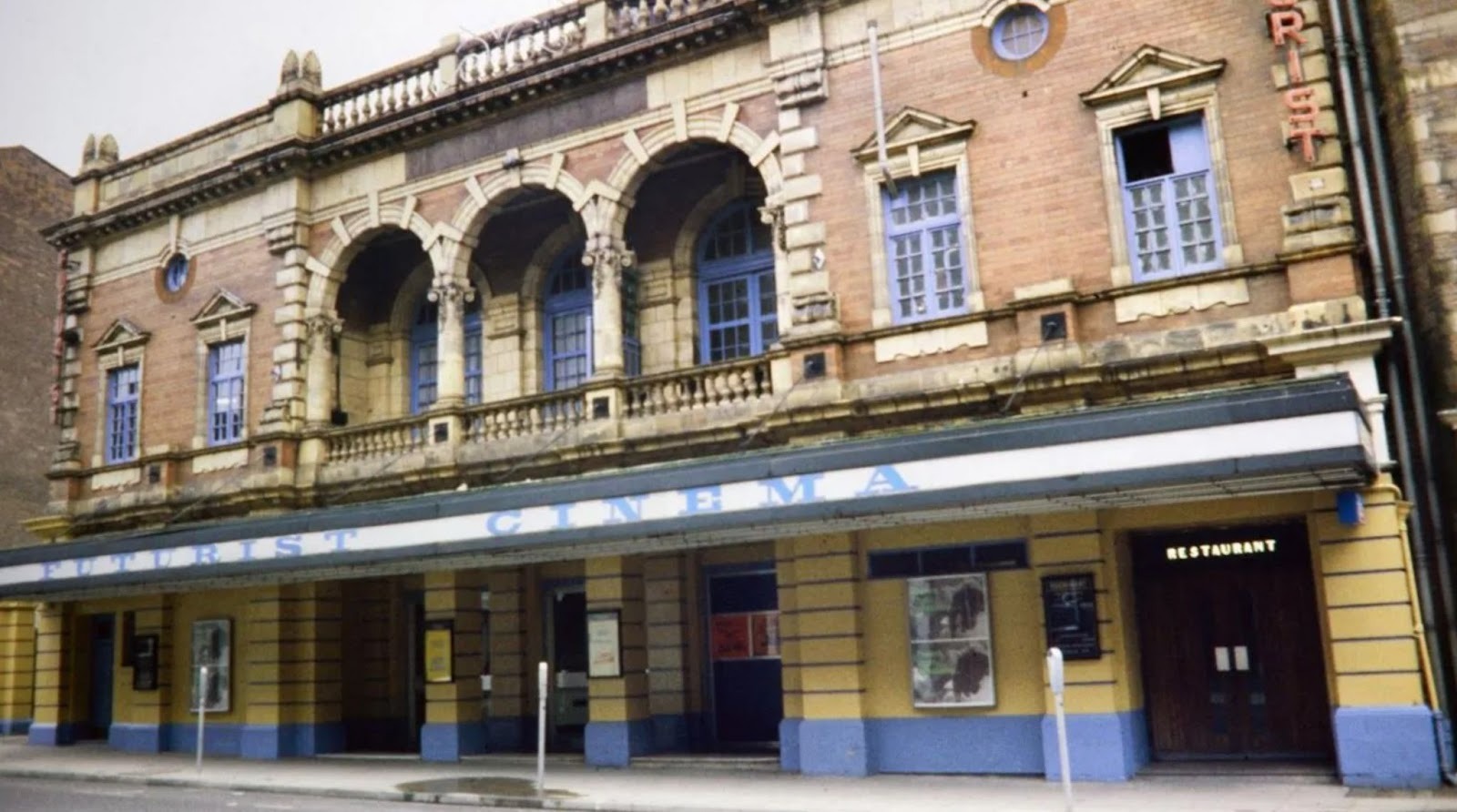
In the 2022 guidebook Buildings of England, The Futurist describes it as having a classic, civil design with pink-red brick and cream terracotta. There is an open Ionic arcade above the entrance. The façade on John Bright Street has two floors of red brick with pale terracotta trim. The design features classic, high-quality stone elements.
With over 105 years of history, The Futurist is a true survivor. It has not only survived these difficult times, but has also brought joy to the people of Birmingham. Early innovative sound films were shown here, followed later by beloved blockbusters. This historic venue has been an adult nightclub, a hookah lounge, and a seafood restaurant.
But regardless of the times, the value and versatility of its 20th-century heritage has always been preserved here. It is no coincidence that this magnificent, historic building is now recognised as a national architectural monument.
Despite its venerable age, the Futurist still looks fantastic, with an exceptional appearance that matches its pioneering role. It survived the attack of the German Luftwaffe, did not crumble during the reconstruction of Birmingham, and now has the recognition it deserves — the status of an architectural monument, which provides it with protection.
Cultural heritage site
By the way, about protection, what does the status of a cultural heritage site mean? It turns out that buildings of special architectural or historical significance are granted this status. Each such cultural heritage site is entered into the National Heritage List for England.
Accordingly, this list is a publicly accessible searchable database containing information about specific heritage sites throughout the country. Currently, the National Heritage List for England contains over 370,000 entries of listed buildings. Of particular interest are Category II buildings, which is the category assigned to the former Futurist cinema. Over 90% of all architectural monuments belong to this category.
An important part of the city’s history
Tim Bridges, advisor to the Victorian Society for Nature Conservation in Birmingham and the West Midlands, said that the Victorian Society was delighted to learn that the historic Futurist cinema had been added to the List of Monuments. This building played an important role in the history of British cinema, being one of the first places where sound films were shown in 1929.
The society also noted that inclusion on this List will help ensure that the elegant classical architecture of the Futurist cinema building continues to be an important part of the Victorian and Edwardian streetscape of John Bright Street in Birmingham for many years to come.
Sources:
- https://historicengland.org.uk/whats-new/in-your-area/midlands/futurist-cinema-birmingham-listed-grade-ii/
- https://c20society.org.uk/news/birminghams-former-futurist-cinema-listed
- https://www.victoriansociety.org.uk/national-news/the-show-will-go-on-as-the-dcms-lists-the-futurist-cinema-in-birmingham/