


A flash mob is a rather strange phenomenon, if not downright eccentric. People who, just a minute ago, were rushing about with serious expressions on their faces, attending to their very important business, suddenly start dancing in unison or blowing their French horns in the middle of the station. As if it were the most natural thing in the world, rather than collective madness. The participants genuinely believe that this phenomenon was born somewhere between the emergence of TikTok and YouTube and their own desire to rack up a million views.
But at birmingham-trend.com, they are well aware that Birmingham was already practicing such ‘sudden musical invasions’ back when the pinnacle of instant communication was the town crier bellowing the news in the square. Birmingham—a city of workers, factories, and perpetual smoke—in the 19th century, strangely enough, also turned out to be the capital of spontaneous performances. The British were accustomed to gathering in crowds and suddenly breaking into song long before humanity had even invented the word ‘flash mob.’
Spontaneous roars in packed pubs after the fifth pint of ale, chaotic and not always polite chants in football stands, wild street performances at fairs—all these are the forerunners of today’s viral videos. So the current events that are making passengers on New Street rub their eyes in amazement are not an internet invention. It is simply a new digital twist on the old Birmingham habit of singing spontaneously—and, above all, loudly.
About the Birmingham grandad behind today’s flash mobs
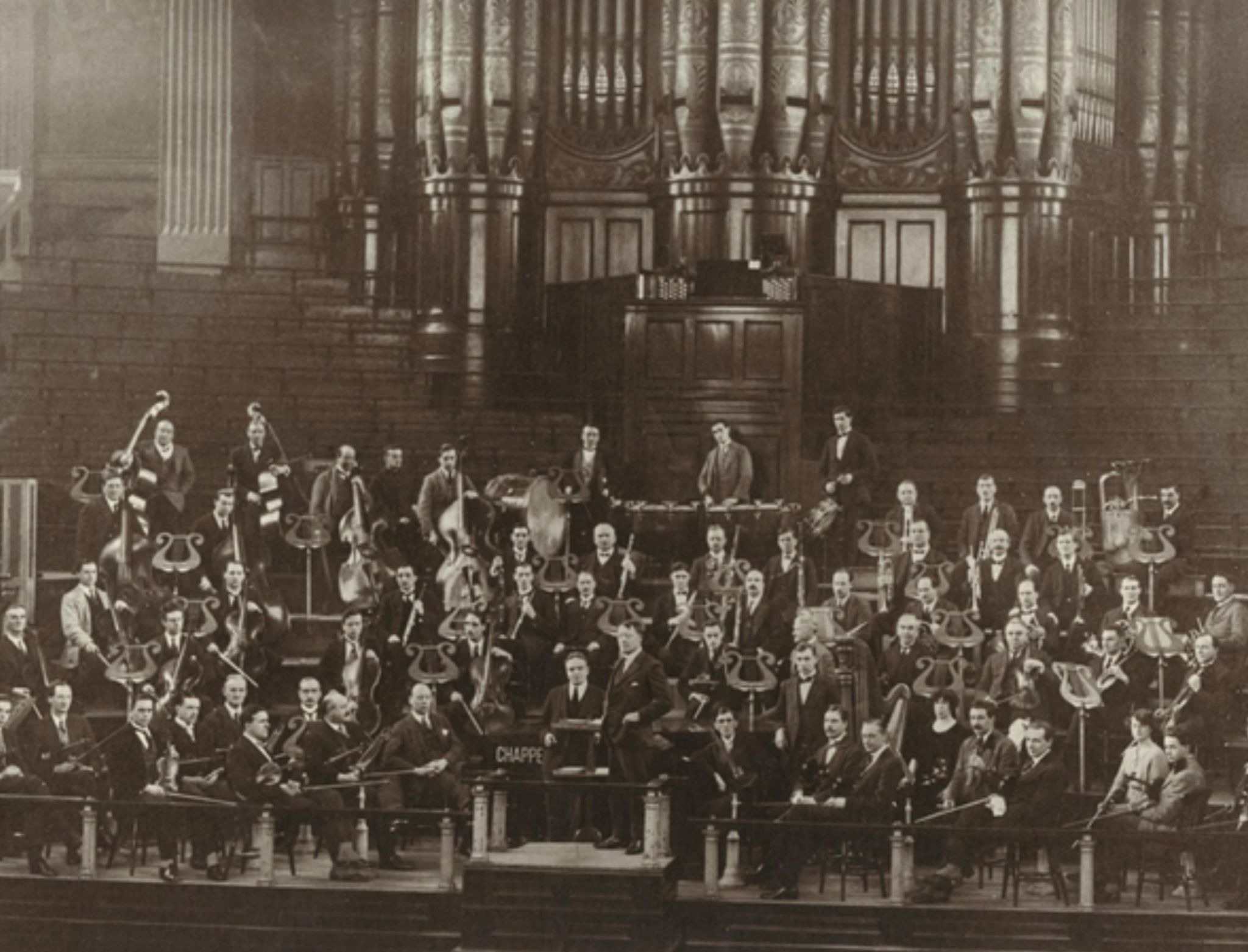
In the 19th century, Birmingham behaved as if it were living inside an endless musical. Whilst other British cities prided themselves on their factories, ports, or banks, Birmingham, with a strange stubbornness, turned every mass gathering into an opportunity for a choir to perform. And if a modern flash mob is a sudden collective performance in a public space, then Victorian England simply did not seem to have the right term for what regularly took place on the streets of Birmingham.
One of the key symbols of this musical obsession was the Birmingham Festival Choral Society, which was founded as far back as 1843. Formally, it was a distinguished choir, the cultural pride of the city, and a centre for academic music. But viewed less formally, Birmingham had simply spent decades practicing to gather huge crowds who sang in unison with such enthusiasm as if the fate of the British Empire depended on it.
The city has historically cherished mass singing as a communal ritual. And everyone sang, everywhere. Brass bands would suddenly burst into working-class neighborhoods during brass band processions, forcing residents to look out of their windows and forget for a few minutes about the factory smoke and the daily grind. Festive marches easily turned into boisterous musical processions, where the line between spectator and participant vanished after the second verse. After football matches, Birmingham would traditionally descend into a collective roar—sometimes so loud that a casual tourist might have thought a revolution was beginning.
A distinct genre was that of fairs and civic celebrations, where street performers, musicians, and simply those inspired by the atmosphere would launch into impromptu performances right in the middle of the crowd. In the 19th and early 20th centuries, the line between an ‘organised concert’ and ‘urban musical anarchy’ was so fine here that at times even the people of Birmingham themselves failed to notice it. And perhaps that is precisely why modern flash mobs have taken to the city so easily: Birmingham was doing this long before the advent of smartphones, social media, and people shouting, ‘Film it, film it, this is going on TikTok!’
We sing. We dance. We stand still
The advent of the internet, and social media in particular, has done for flash mobs what petrol does for a bonfire. People suddenly realised: now you can not only behave strangely in public places but also get likes, views, and a few minutes of digital fame for it.
The phenomenon quickly spiraled out of control, and flash mobs began to multiply faster than cat memes. One of the pioneers of modern flash mob culture was the journalist Bill Wasik. It is his 2003 event that is often cited as the first modern flash mob. At Macy’s Herald Square in New York, around a hundred people simultaneously entered the furniture department and began, in all seriousness, to convince the sales assistants that they all lived together in a commune on the outskirts of the city. They were looking for a single ‘love mat’ for it.
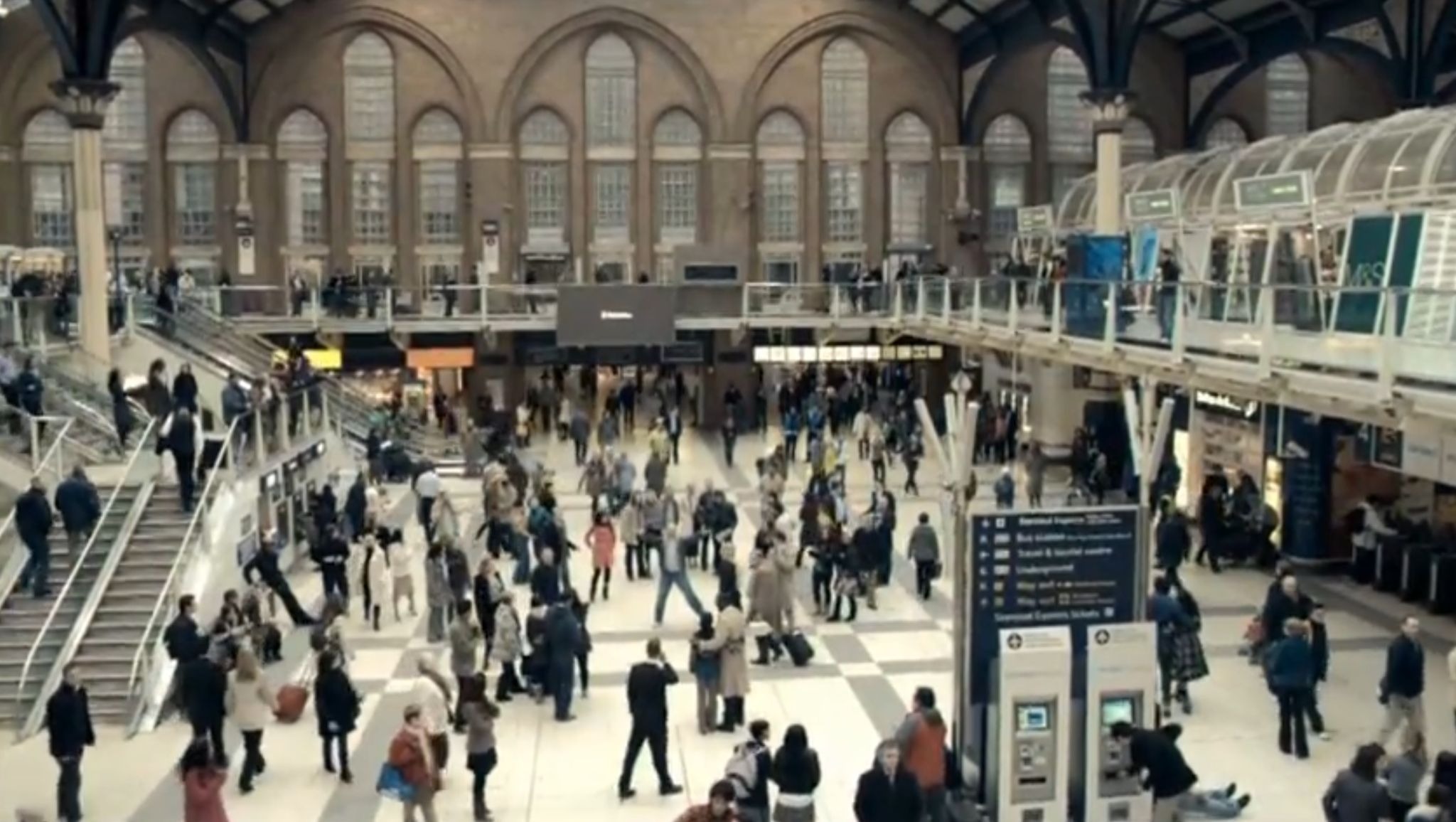
The shop staff must have really regretted not taking the day off. Then a veritable epidemic of collective eccentricity broke out. In 2009, at Liverpool Street station in London, hundreds of people suddenly broke into a synchronised, explosive dance right in the middle of the morning rush hour. Passengers who, just a minute earlier, had been nervously checking the train boards, suddenly found themselves in the middle of a large-scale musical.
British reserve was put to the test back then, and the video went viral on the early days of YouTube. The ‘Frozen Grand Central’ performance in New York became just as iconic. In that same year, 2008, exactly 207 people, on the command of the art collective Improv Everywhere, froze in place right in the middle of Grand Central Station for five minutes. Some stood with a phone to their ear, some were carrying coffee, and some froze in a very awkward position.
The best thing about this campaign is that passers-by initially tried to act as if everything was normal. But when two hundred people suddenly turn into mannequins, even hardened New Yorkers start to get a bit nervous. So the flash mobs quickly proved one simple thing: people absolutely love the chance to step out of their roles as busy adults, even if only for a few minutes.
It’s your turn, city of a thousand trades!
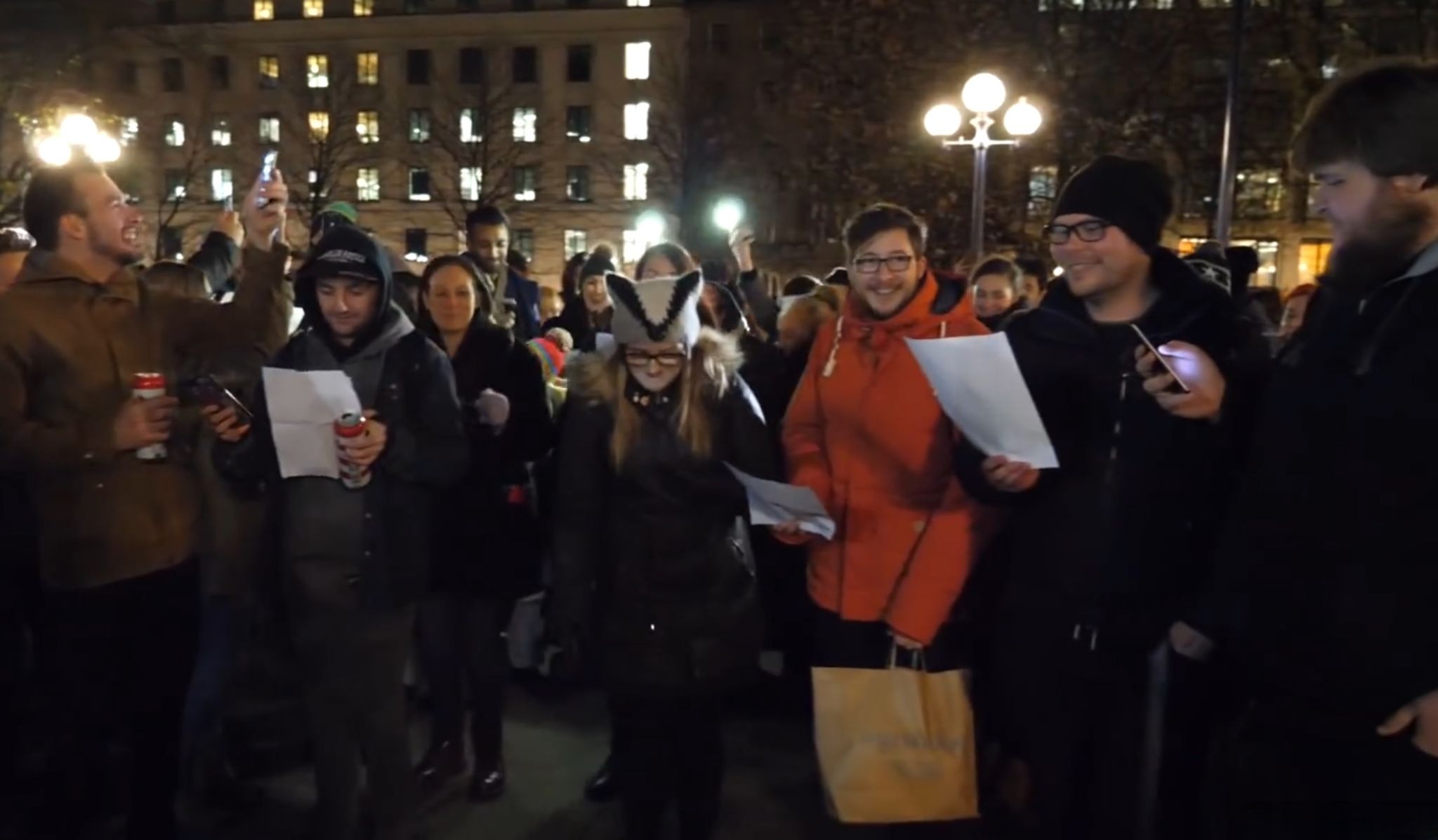
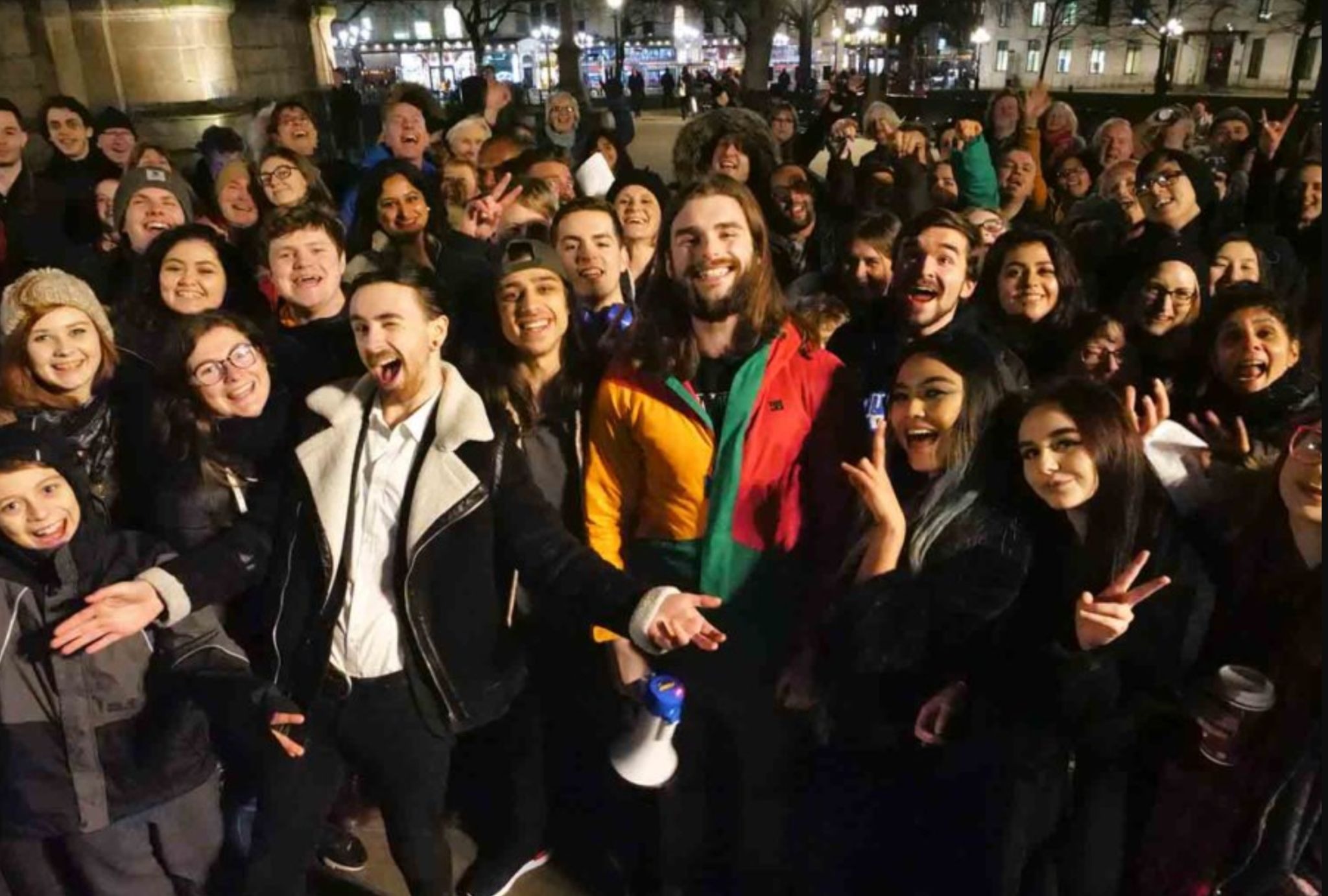
Birmingham, which had many years of experience with collective musical chaos dating back to Victorian times, had no intention of lagging behind and, surprisingly, fitted seamlessly into the new era. One of the most famous local flash mobs was the mass sing-along to Queen’s ‘Bohemian Rhapsody’ in the city centre. In 2018, hundreds of people gathered outside Birmingham Cathedral and suddenly transformed the square into a giant choir. Passers-by initially watched with that typically British look of restrained surprise but very quickly began singing along to ‘Galileo!’ as if they’d been rehearsing it all their lives.
And just a few months before that, the city had witnessed a mass sing-along to Toto’s hit ‘Africa.’ The idea was so absurd that it worked perfectly: several hundred people voluntarily gathered in the centre of Birmingham simply to perform the 1980s song in unison under the winter British sky. The internet, of course, was delighted.
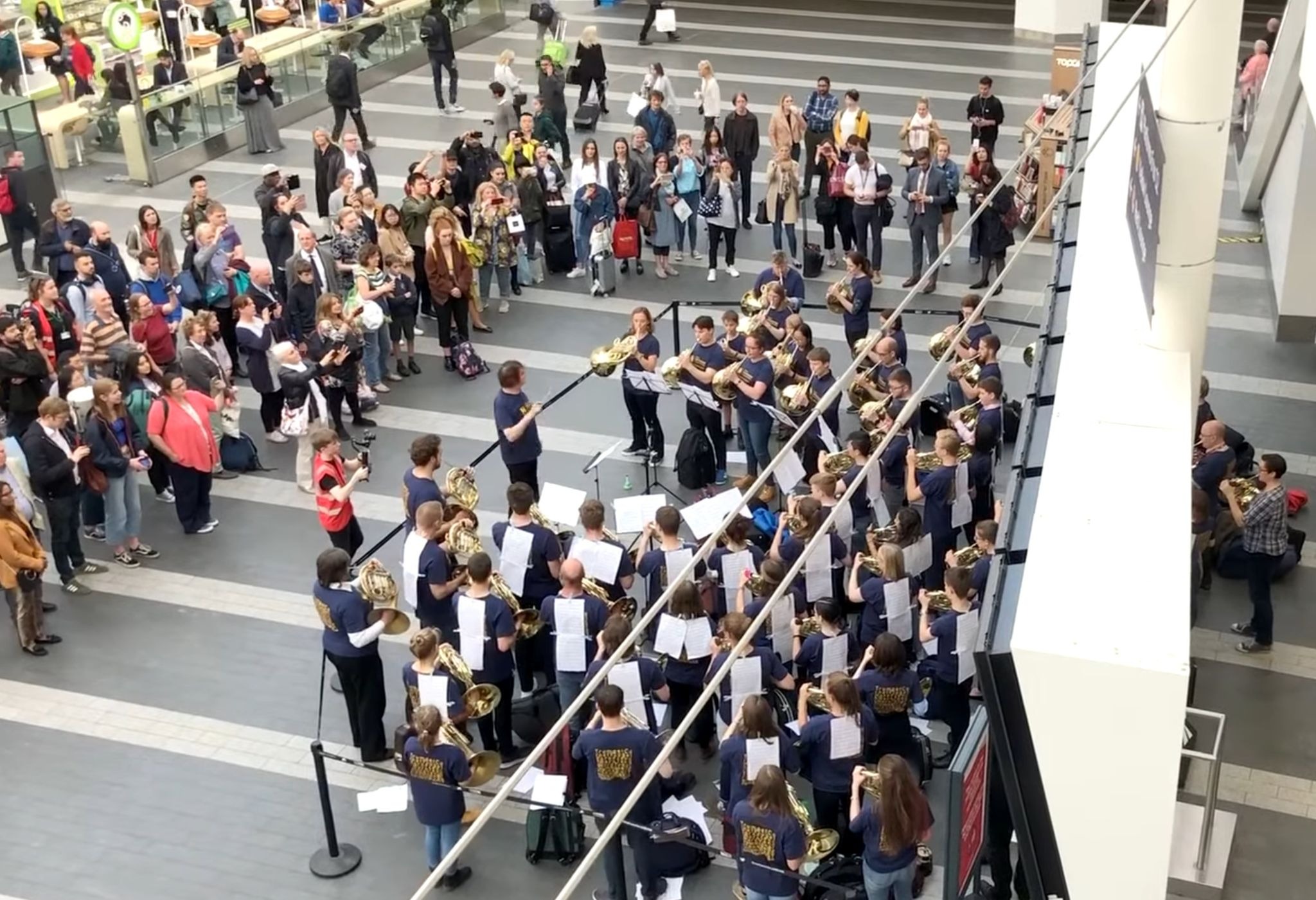
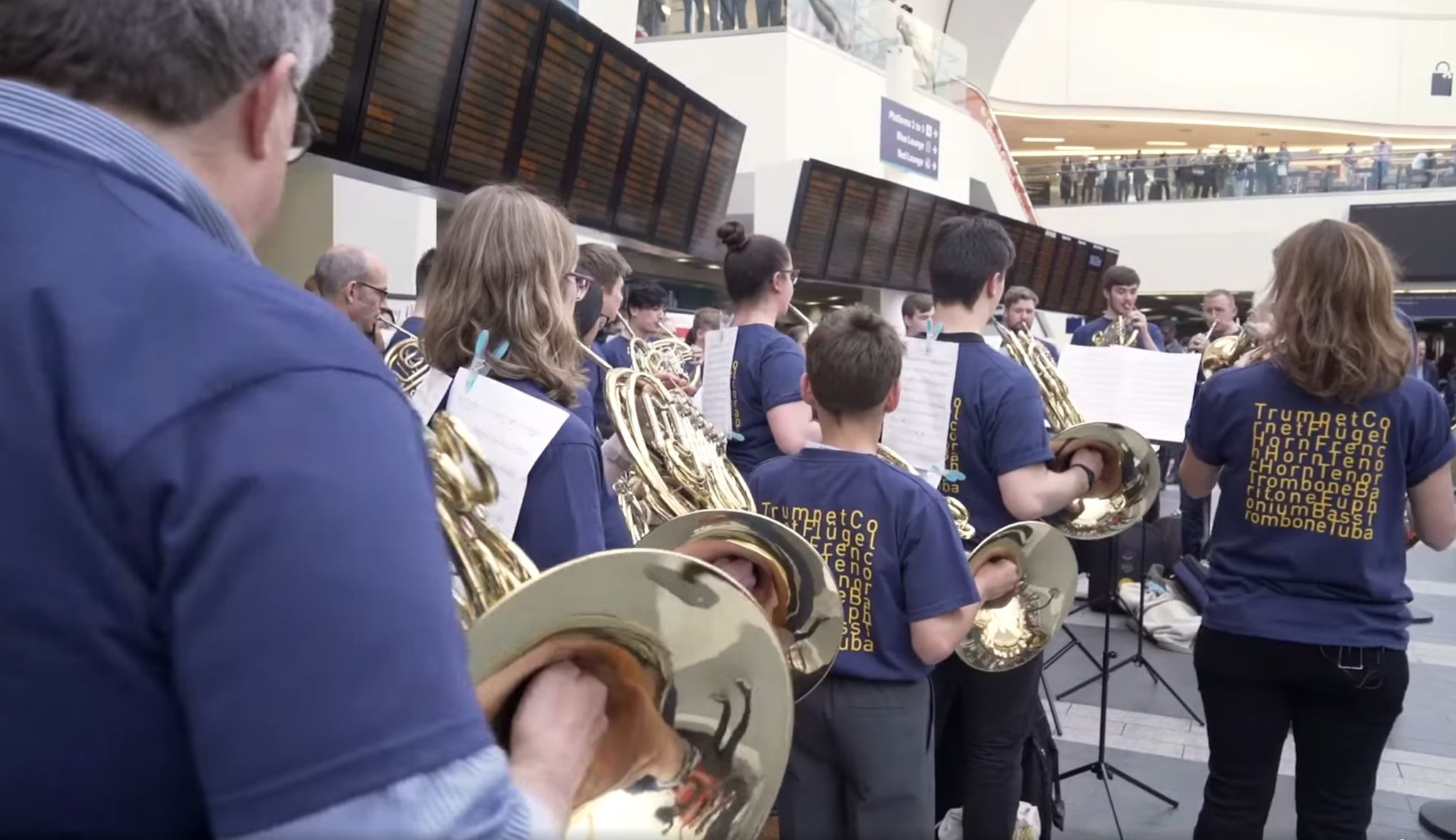
But the city truly demonstrated the extent of Birmingham’s devotion to musical absurdity in 2019, when a flash mob involving 67 French horn players took place at Birmingham New Street railway station. It was organised by the Royal Birmingham Conservatoire.
Passengers who were simply trying not to miss their train suddenly found themselves in the middle of a live orchestra. And that is probably the best description of a modern flash mob: you go out for a coffee, and a minute later you’re standing among dozens of people with wind instruments.
The craziest flash mob is yet to come
It seems the history of flash mobs is far from over. People simply love doing something bizarre together in public places too much to just stop. And it’s entirely possible that the most absurd, the most sensational, or the funniest performance is still to come.
What’s more, there’s every chance that this will happen in Birmingham. A city where, over a century ago, people were already organising mass sing-alongs without TikTok or Wi-Fi. Birmingham has clearly always had a special knack for suddenly transforming the everyday hustle and bustle of the city into a collective art form.
Sources: