


Birmingham was the third most bombed city in the UK during the Second World War. These numerous bombings completely changed the urban landscape, causing irreparable damage to the city’s architecture. The “temples of culture” were also hit by German bombs. The Birmingham Repertory Theatre is one of the most striking examples that survived not just one, but two world wars. Read more on birmingham-trend.com.
The First World War

The Birmingham Repertory Theatre opened on 15 February 1913. Its debut production in the new building was the play Twelfth Night. By the way, the construction was completed in four months. The financial side was taken over by Barry Jackson, a theatre legend of those times, who fully funded the work.
The first company was created from the Pilgrim Players, an amateur theatre group that had been performing throughout the city since 1907. It should be noted that the Birmingham Repertory Theatre was the first purpose-built theatre in the UK.
And just half a year after its opening, the First World War broke out. The outbreak of hostilities caused certain inconveniences to the work of the theatre. Actors and theatre staff could not pretend that the war did not affect them. Therefore, they performed in military hospitals, entertaining the wounded and giving them an opportunity to escape from the horrors of war. Moreover, in the spring of 1915, the theatre company even went on tour.
In addition, some men from the theatre company went to war, and some who stayed but did not take part in performances worked at wartime enterprises, for example, at an aluminium smelter. Meanwhile, the First World War provided a chance for women in the theatre to prove themselves in the absence of men. The most famous example is that of Maud Hill, who in 1917 took over as theatre director and became the first woman director in the UK.
The outbreak of the Second World War
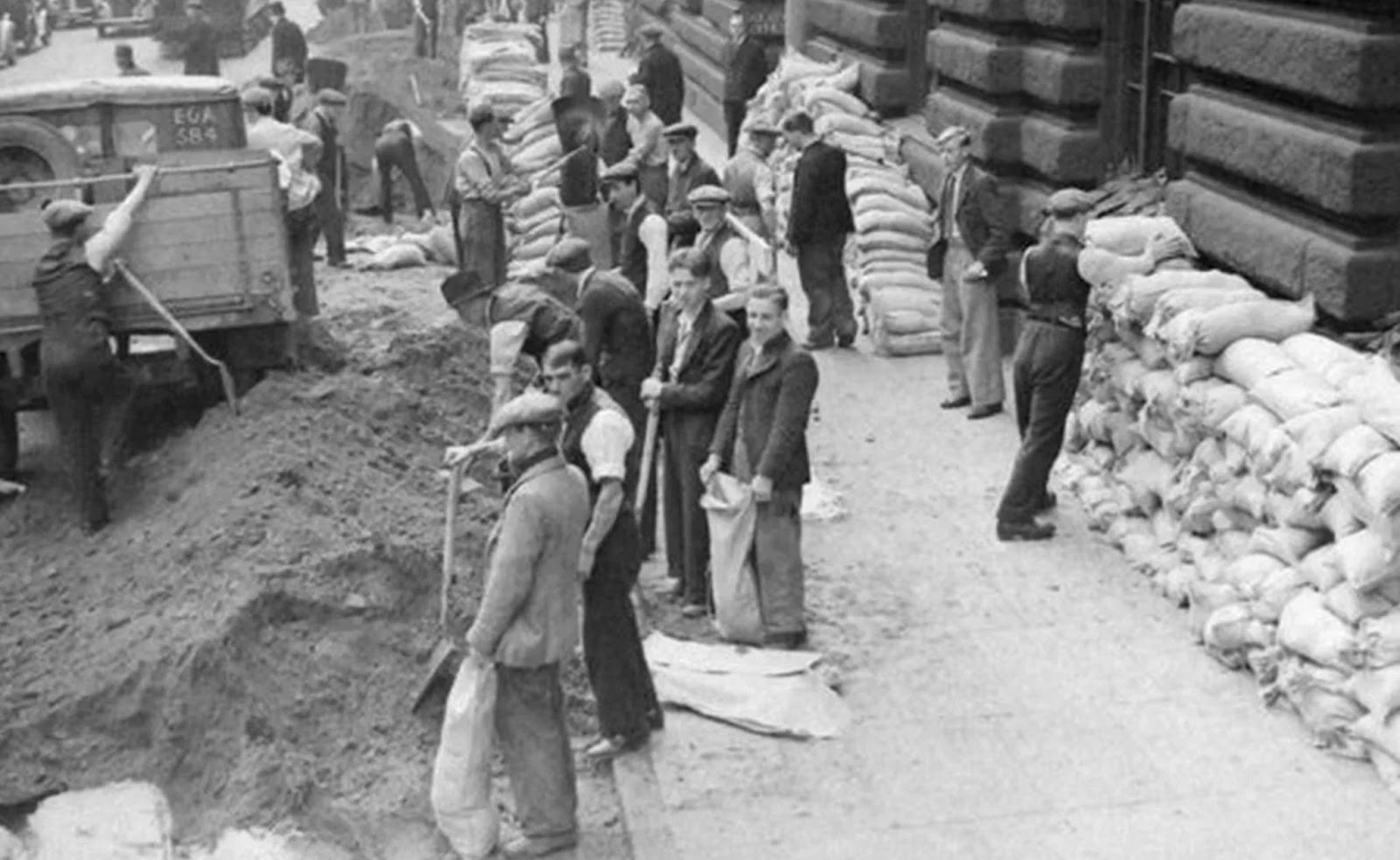
After the outbreak of the Second World War, on 3 September 1939, all places of public entertainment were closed by government decree. Naturally, this decree also applied to theatres in the UK. However, after a while it became clear that this was a mistake. As it turned out, such establishments should continue to operate, if only to keep people’s morale up.
As a result, some theatres resumed their work, operating in this mode until the very end of Operation Blitz. The work was interrupted only a few times during the worst bombing of Birmingham, i.e. during the three months from November 1940 to February 1941. During this period, the German Blitz was in full swing.
Of course, since it was not a question of resuming work in peacetime, we had to make concessions. This was due to security issues. In addition, the mandatory darkening of the premises was a big inconvenience. After all, it was not allowed to light up not only the streets, but also the premises so that the light could be seen from the outside.
That is why the time of the performances was initially changed from the usual 18:40 and 20:50 to 17:35 and 19:45. In addition, the audience had to bring gas masks when going to the theatre for the performance. There were strong fears of gas attacks by the German air force.
After the number of air raids increased even more, it was decided to move the start of the performances to an even earlier time. In the autumn of 1940, they began at 13:30 and 15:30, the first and second performances respectively. Theatre programmes also took on the features of wartime design. One piece of paper informed the audience that the second performance would end at 17:30, and that this would guarantee 100% satisfaction and comfort on the way home. The programme also featured the letter “V” for victory and the British flag.
The programme also informed the audience that the theatre was practising light warning signs, which were placed on both sides of the stage. These signals told the audience that everything was fine. If an alarm was announced, then everyone who wanted to leave could do so, but the performance would not be interrupted.
So staying in the theatre was not only more profitable, because you paid to see the performance, but also safer. In addition, even if the performance was interrupted, the actors continued to entertain the audience with improvised miniatures, or they simply sang along with the audience to keep morale up.
The Birmingham Repertory during the Blitz
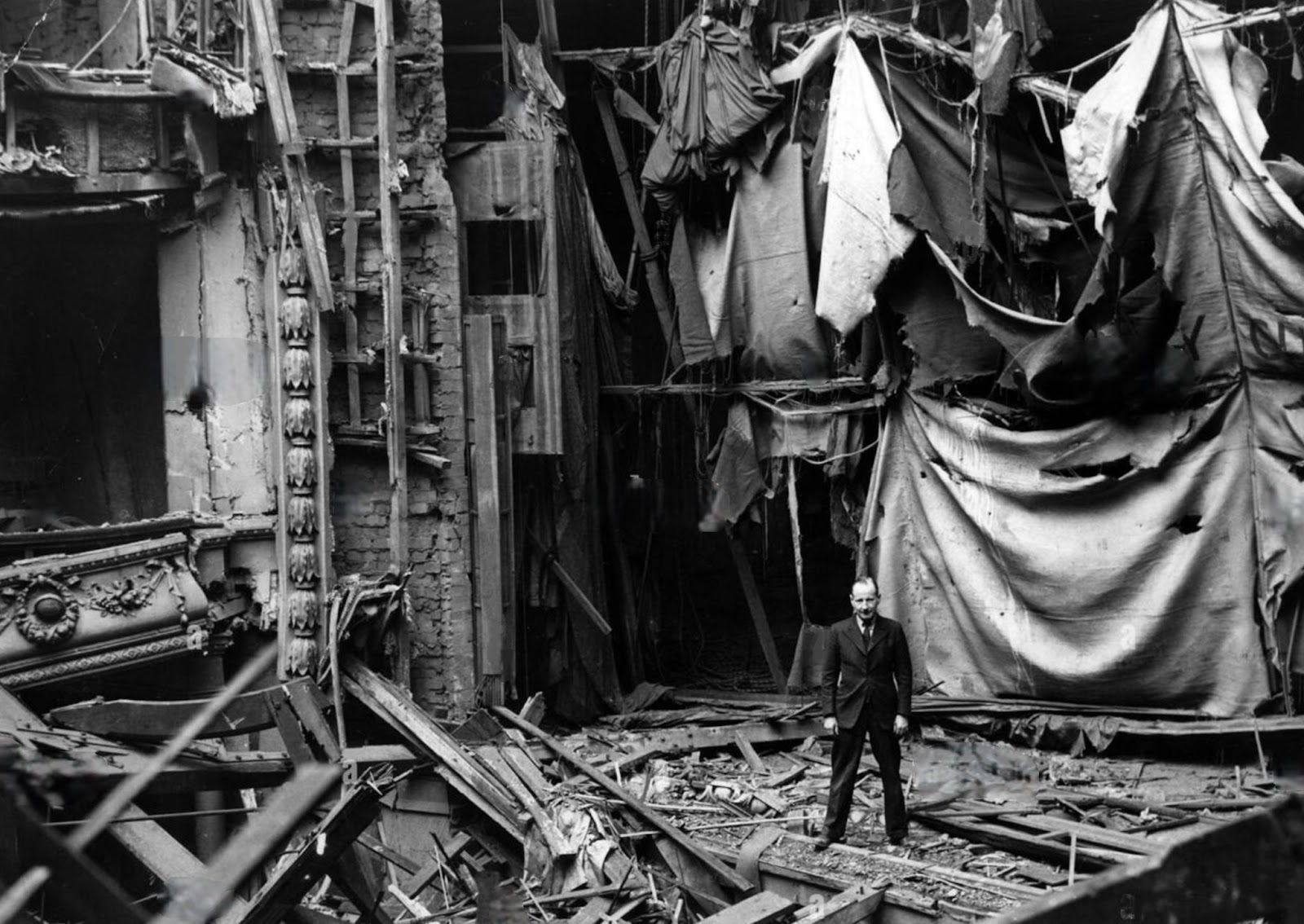
After the outbreak of the Second World War in 1939, the Birmingham Repertory Theatre was forced to close. Although it reopened in 1940, it was not until 1940 that the German bombing raids affected the theatre’s building. At the same time, the German bombing raids affected the theatre’s building. In 1940, during the most brutal phase, a bomb hit the wardrobe of the theatre. As a result, all the theatre costumes that had been created over thirty years were destroyed.
However, the theatre did not give up, and performances continued until December. However, for safety reasons, only daytime performances were shown in the theatre for the 23rd day of the week. Then the theatre was closed for a whole year for the same reason. The theatre was reopened at the end of 1941, at the end of 1931, when an outside company staged performances, and later, in 1942, the main repertory theatre company returned.
Another remarkable gesture from the theatre took place in 1943. Then the company celebrated its thirtieth anniversary. It was decided not to organise any celebrations for the anniversary, but simply to keep the theatre’s doors open to the public on that day.
The Lord Mayor of Birmingham invited the founder and director of the theatre, Barry Jackson, to create a series of performances called Plays in the Parks. It was about performances that were staged in the open air on green areas in Birmingham. Such performances allowed us to attract a large number of viewers. The mayor’s emergency fund was used to implement this idea, as well as the support of the Council for the Encouragement of Music and the Arts.
So with the necessary financial backing to bring the idea to life, Jackson set about it. True, the poet did not direct these performances, but he was the driving force behind the project.56 At the same time, the empty theatre was used as an administrative centre.
As a result, the Plays in the Parks project was a great success with Birmingham residents. More than 36 thousand people attended the theatre performances. Improvised stages appeared in Cannon Hill, Aston, Handsworth and Ward End. People enjoyed theatre all summer long.
Post-war years
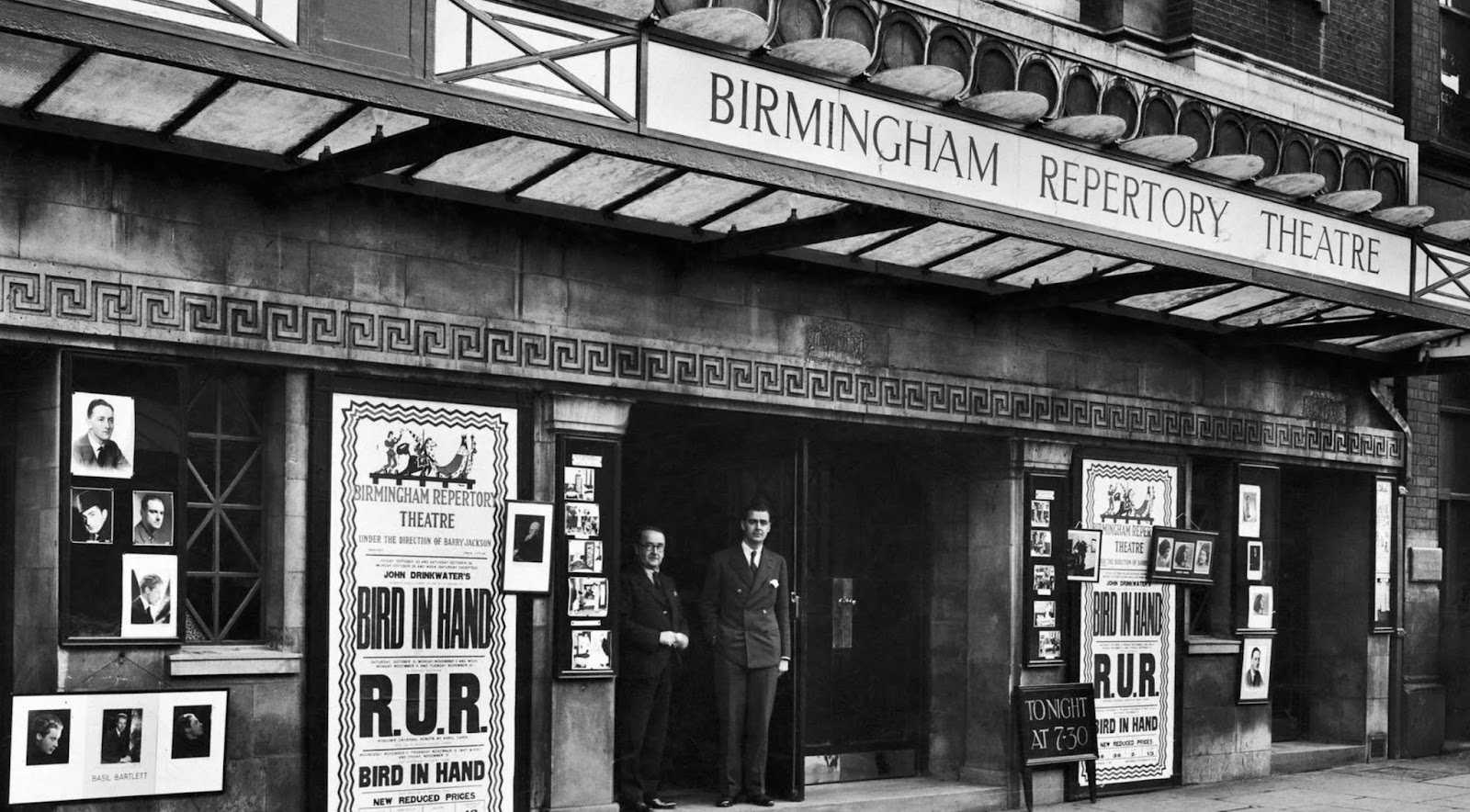
The demonstrable success of this project led to a theatre boom in Birmingham in the second half of the Second World War. And after the Birmingham Repertory Theatre opened in 1942, its popularity among Birmingham residents was undeniable. Interestingly, one of the last open-air performances featured the young Paul Schofield in the title role of Horatio in Hamlet, a notable talent who was nurtured by this project and was able to flourish after the war.
After Nazi Germany was defeated in World War II, the Birmingham Repertory staged its first post-war play with the onset of peacetime. It was Man and Superman by George Bernard Shaw.
Interestingly, the play was directed by the then almost unknown Peter Brook, who was barely 20 years old at the time. In the post-war years and later, many talented, albeit young, performers, and directors began their careers in the theatre.
Sources: